Context
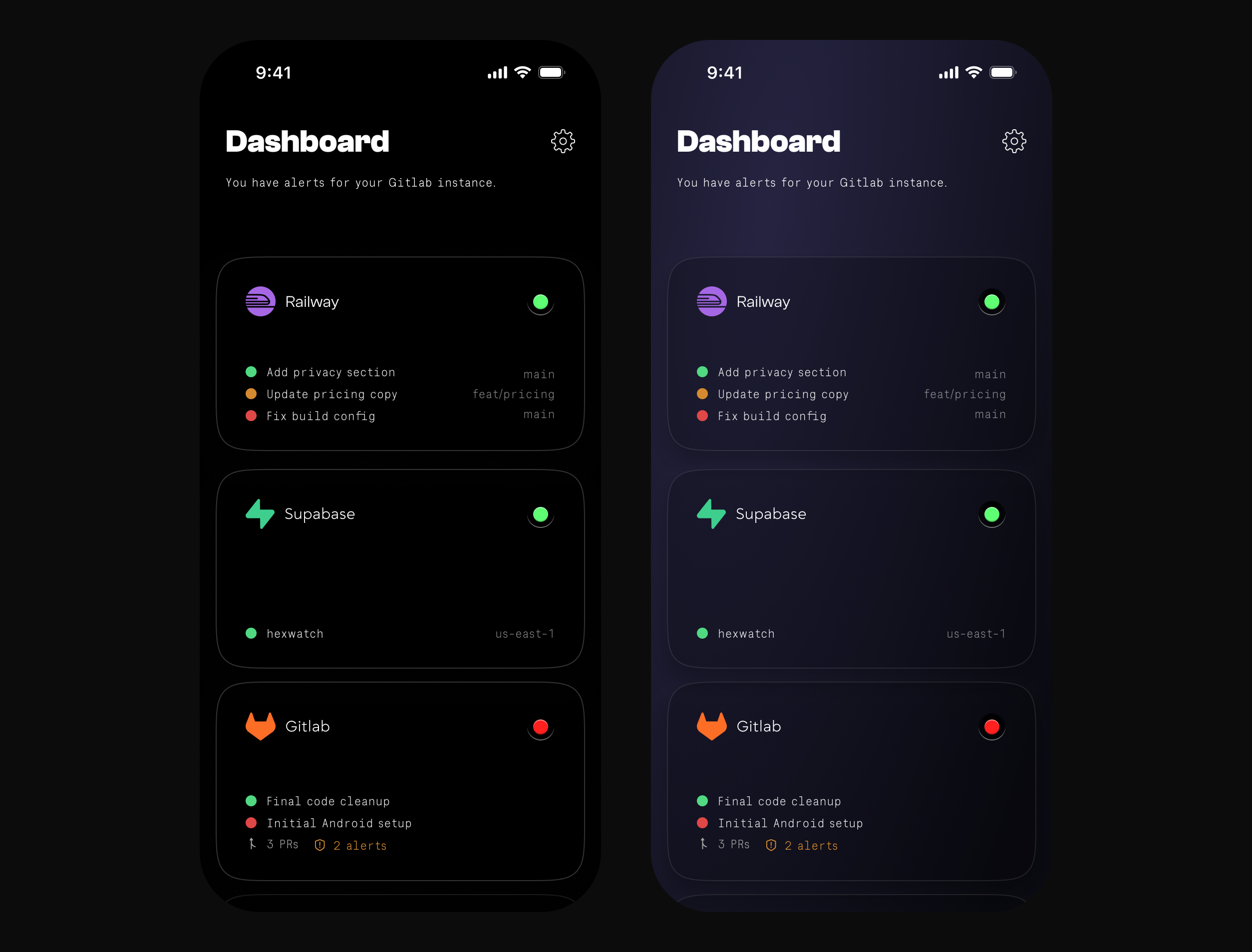
If you run real infrastructure, you check ten dashboards to answer one question. Vercel, Railway, Supabase, GitHub, Stripe, Sentry, Cloudflare: each has its own app, its own login, its own idea of a notification, and none of them know the others exist. I wanted one native place to see what’s running, what it costs and what just broke, and I wasn’t going to hand my API tokens to someone else’s server to get it.
I also wanted to know if the pipeline I’d been describing to clients actually held: design everything in Figma, then ship it myself with Claude Code and Codex. Team of one. It’s live at hexwatch.app.
Contribution
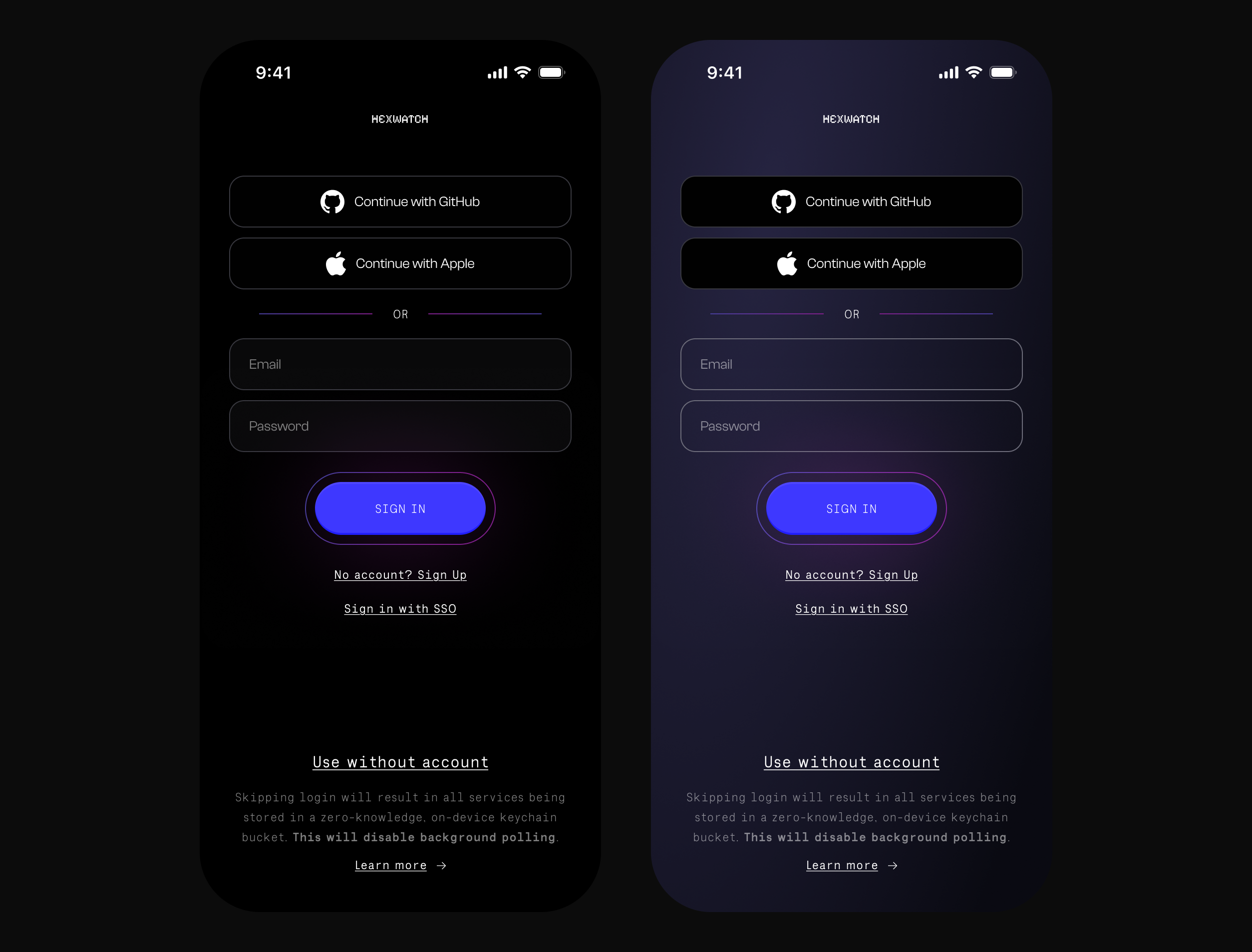
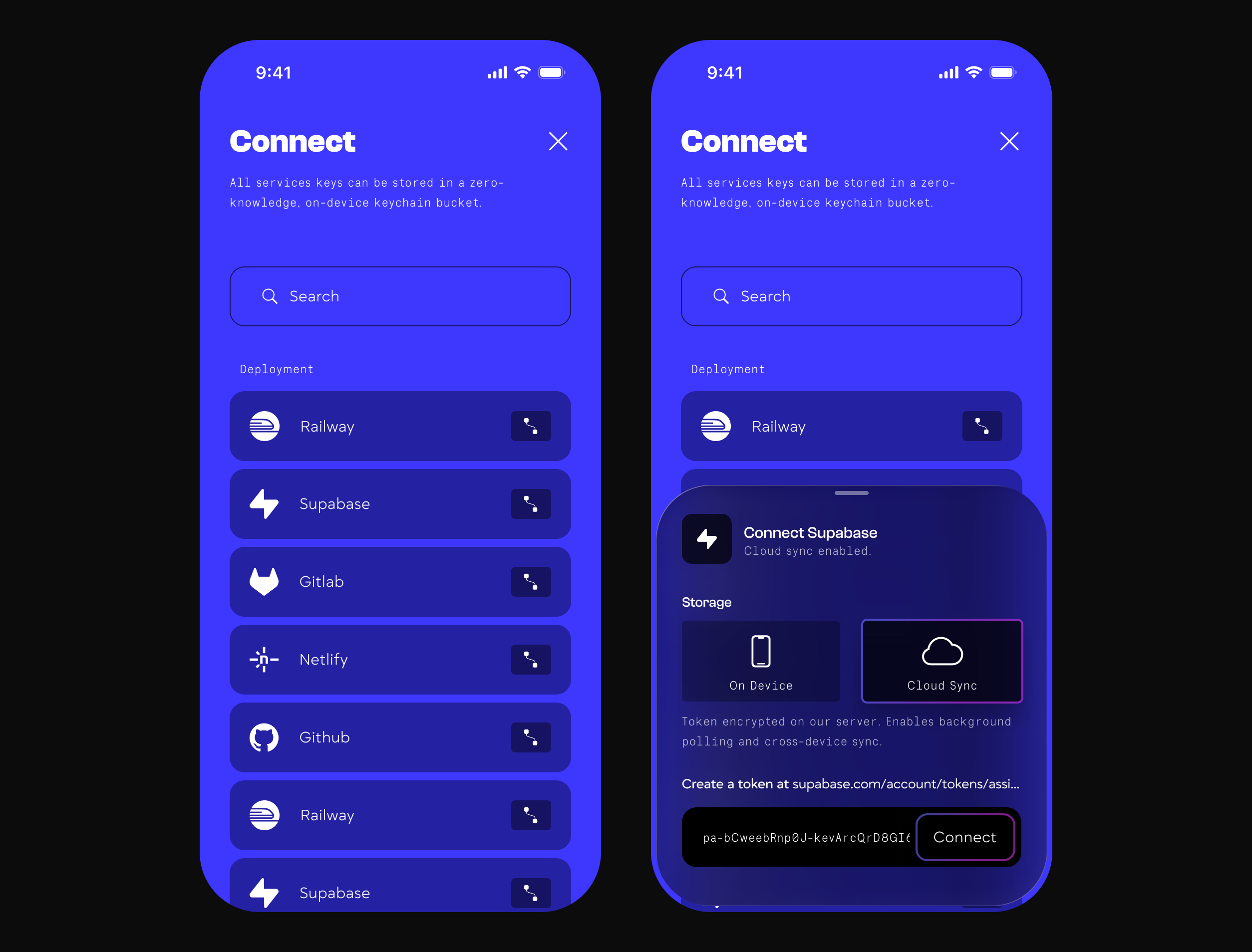
The trust model is the product. Most monitoring apps keep your tokens on their servers. I built two modes: cloud sync with AES-256-GCM encryption for people who want their config on every device, and a zero-knowledge on-device mode that keeps everything in the iOS Keychain with hardware-backed keys and never sends a byte off the phone. No analytics, no telemetry, no crash reporter phoning home. The trade is real. On-device mode means no sync, no recovery if you lose the phone, and I can’t see how anyone uses the thing. I took it because the people who run infrastructure are exactly the people who read the privacy policy.
Native over cross-platform. Watch complications, background refresh, Keychain and widgets all behave better in Swift, and the whole point was glanceable. Android is the cost; it’s a separate build and still in progress.
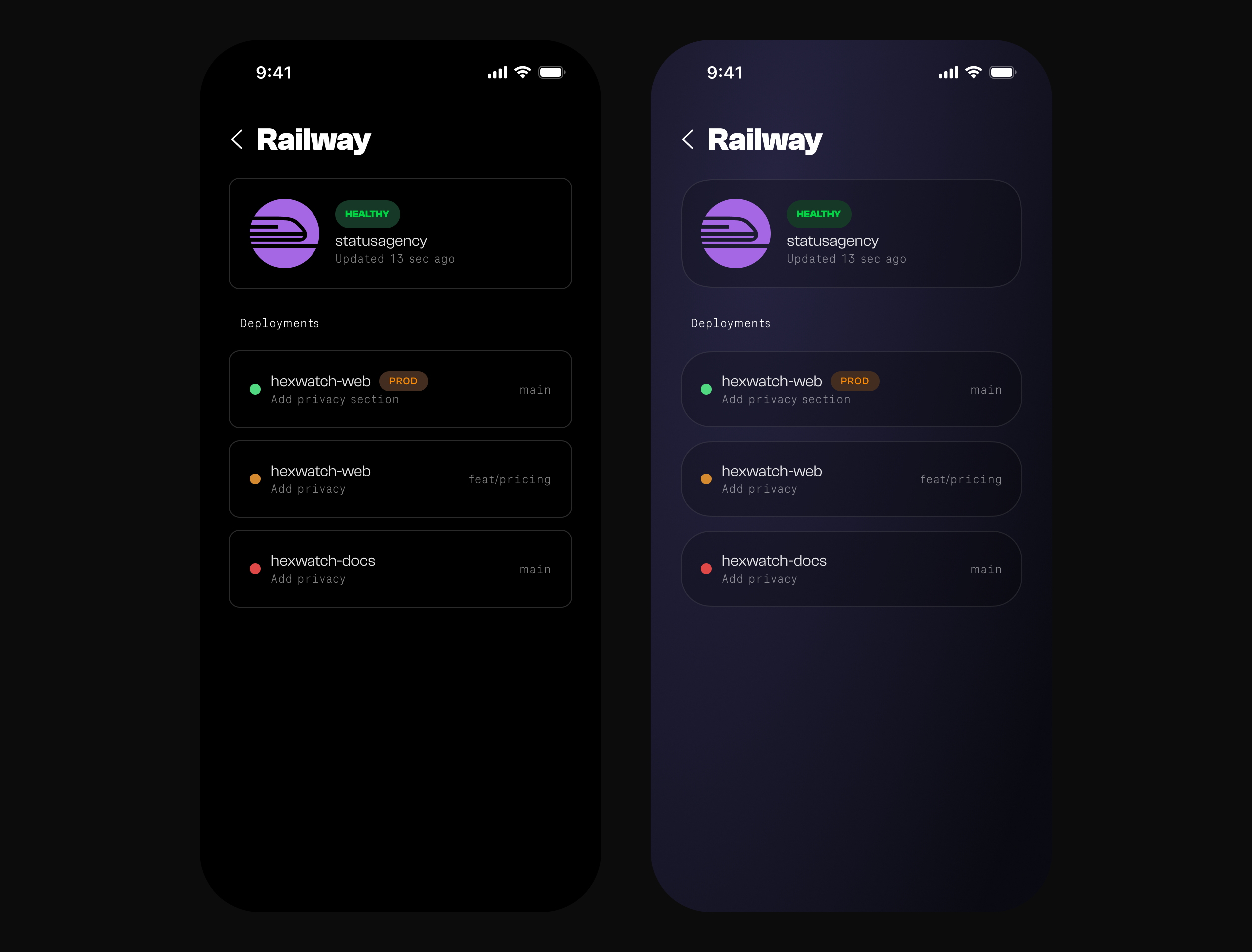
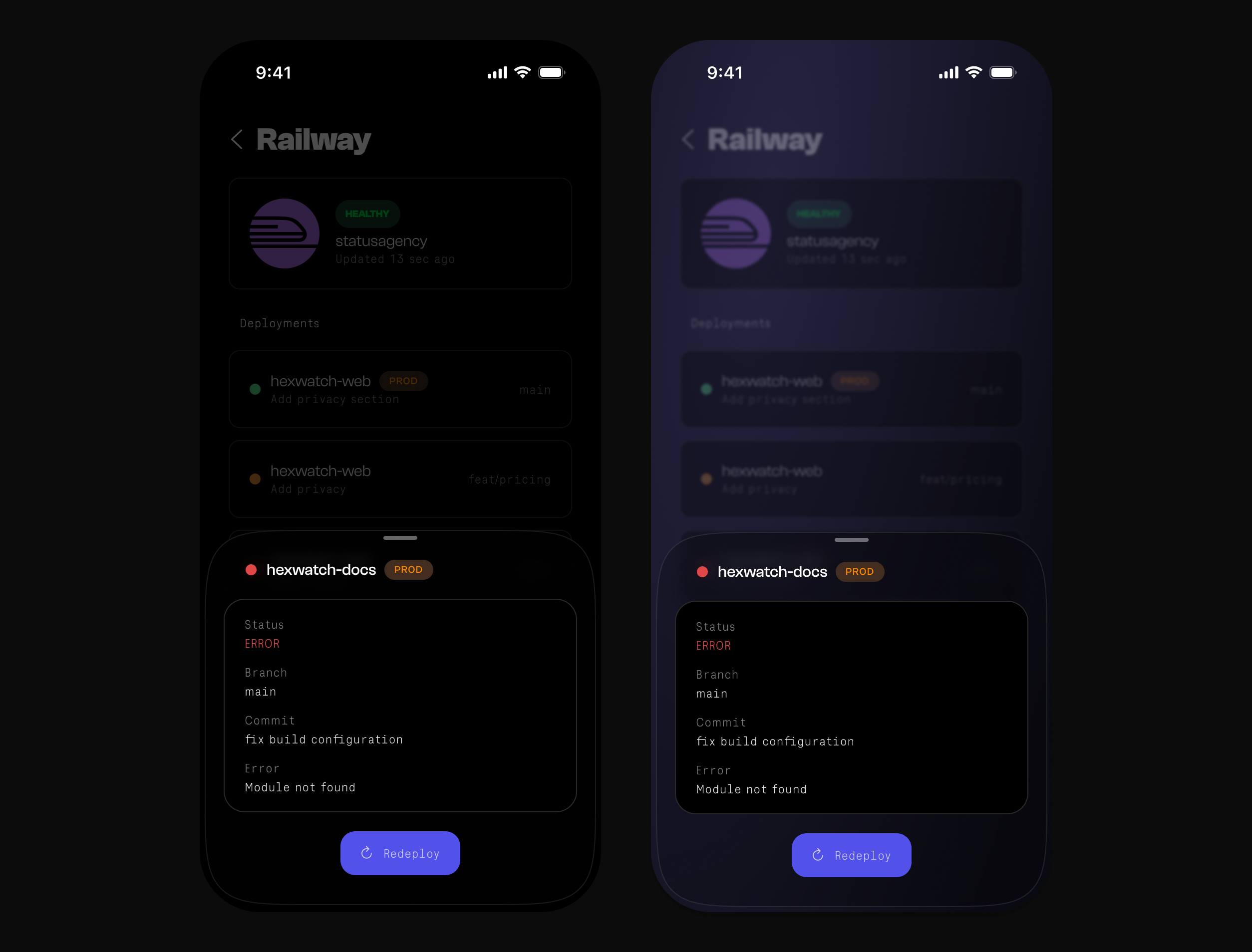
The build itself: every screen and every state went into Figma first, including empty, error and loading for all 20 integrations, and that file was the spec I held the code to. Claude Code wrote most of the Swift. I said no to every suggestion that added a dependency. The judgment was mine. The typing wasn’t.
Outcome
On the App Store, monitoring 20 services on iOS, iPadOS and watchOS. Android in development. The pipeline held: one person, Figma to production.